Rethinking How We Protect Crops
There is a quiet shift happening in British agriculture. Walk into any farm office and you will likely see a laptop with field maps, soil samples, and yield data spread across the screen. The days of blanket spraying an entire field with the same agrochemicals are fading. In their place, a more targeted approach is emerging, one that uses drones, sensors, and software to apply inputs only where they are needed. This is the essence of precision crop spraying, and it is changing the way we think about crop protection.
I have spent the last decade working with farmers across the UK, helping them integrate drone technology into their daily operations. What I have learned is that precision agriculture is not about gimmicks. It is about making better decisions based on data. And when it comes to spraying, that data can save money, reduce waste, and improve yields in ways that traditional methods simply cannot match.
The Problem with Traditional Spraying
Conventional spraying treats a whole field as a uniform surface. A farmer sets an application rate based on the average condition of the crop, then drives a tractor or uses a crop sprayer to cover every metre of ground with the same mixture. This approach works, but it is inefficient. Parts of the field with healthy, vigorous crops may not need the same dose as areas struggling with weed pressure or disease. Applying the same rate everywhere means some areas get too much, and others get too little.
Too much agrochemical is not just a cost issue. It can lead to runoff into local watercourses, damage beneficial insects, and increase the risk of residues on produce. Too little, and you might miss a patch that needs treatment. The result is uneven crop growth, wasted inputs, and a larger environmental footprint than necessary.
How Drones Bring Precision
Drone spraying changes the equation. Instead of a fixed rate across the whole field, drones can use variable rate application, adjusting the amount of product based on real-time data from multispectral imaging and NDVI. These sensors measure the health of the crop canopy, picking up variations in chlorophyll content and plant vigour. A farmer can see exactly which zones are stressed, which are thriving, and which are being overtaken by weeds.
With that information, the drone can deliver targeted spraying to the specific areas that need treatment. It is not just about saving money on chemicals. It is about applying the right product, at the right rate, in the right place, at the right time. That is the core idea behind smart farming, and it is already being used on farms of all sizes, from arable operations in East Anglia to orchards in Kent.
More Than Just a Flying Sprayer
People often ask me if a drone is just a small version of a tractor sprayer. The answer is no. The difference is not just the platform, but the whole workflow. A drone can be flown low over the crop, using GPS guidance to follow precise paths and avoid overlaps. The spray is delivered through carefully designed nozzle technology that creates fine droplets, which can be directed at the target with greater accuracy.
This has a direct impact on spray drift. With traditional equipment, wind can carry droplets away from the target, wasting product and potentially harming neighbouring fields or sensitive habitats. Drones, because they fly closer to the crop and can adjust their altitude and speed, produce far less drift. That is a significant advantage, especially near waterways, hedgerows, or residential areas.
Another benefit is access. Not every field is easy to reach with a heavy tractor. Wet ground, steep slopes, or delicate crops can make ground-based spraying difficult or even damaging. Drones can operate in these conditions, reducing soil compaction and allowing treatment at times when a tractor would cause more harm than good.
Building a Complete Picture
Precision crop spraying does not happen in isolation. It relies on data from multiple sources. Field mapping is the first step. By flying a drone over the field and capturing high-resolution images, we can build a detailed picture of the terrain, the crop canopy, and any problem areas. Over time, this data reveals patterns of soil variability, showing where drainage is poor, where fertility is low, and where weeds tend to establish.
When combined with soil samples, the map becomes a powerful agronomy tool. Instead of guessing, you can make decisions based on evidence. For example, if the NDVI data shows a patch of low vigour, you might take a closer look and find that it is due to a compaction layer or a nutrient deficiency. That knowledge allows you to adjust your application rate for that specific zone, rather than treating the whole field the same.
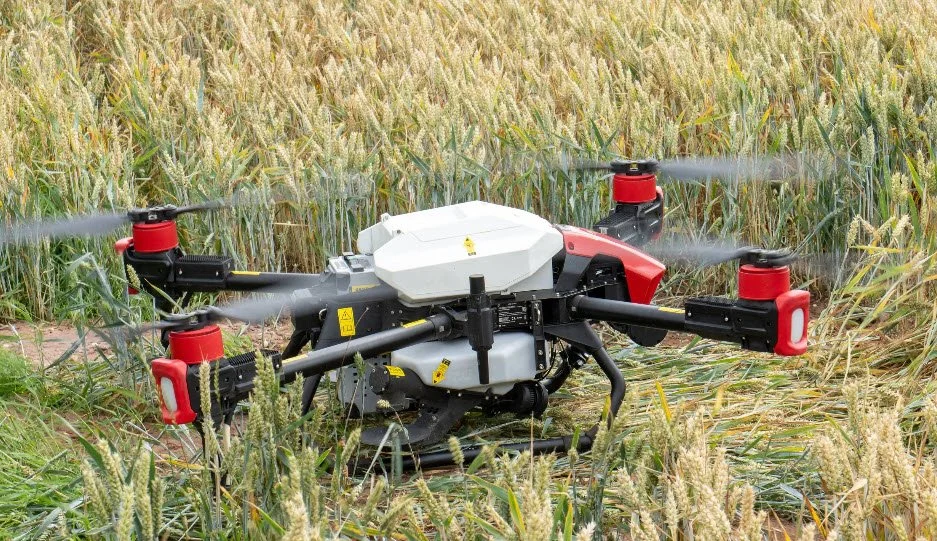
This is where drone spraying really shines. It allows you to act on the data you have collected, in a timely and flexible way. If a weed outbreak appears in a corner of a field, you do not have to wait for a contractor to bring in a large sprayer. You can send a drone out the same day, with targeted spraying to that area, using a herbicide that is suited to the weed species present.
The Role of Weed Detection
Weed detection is one of the most exciting developments in this area. With advanced image recognition and machine learning, drones can now identify different weed species in the crop canopy. This is not just about seeing green against brown. It is about distinguishing between a broadleaf weed and a grass weed, and even assessing the density of the infestation.
That information allows for a much more precise response. Instead of a blanket application of a residual herbicide, you can apply a contact herbicide only where the weeds are present, and at a rate that is appropriate for the stage of growth. This reduces the amount of agrochemical used, lowers costs, and lessens the environmental impact. It is a win-win for the farm and for the surrounding ecosystem.
Practical Considerations and Trade-Offs
Of course, precision crop spraying is not without its challenges. The initial investment in drone technology, sensors, and software can be significant. There is also a learning curve involved. Understanding NDVI data, interpreting multispectral images, and adjusting application rates based on that information requires a certain level of technical knowledge. Not every farmer is comfortable with that, and it is perfectly reasonable to feel that way.
That is where service providers come in. Many farms choose to work with specialists who offer drone spraying as a service. This allows them to benefit from precision agriculture without having to buy the equipment or train their own pilots. The provider brings the drone, the sensors, and the expertise, and the farmer gets the results. This model is becoming increasingly popular in the UK, and it is a practical solution for many operations.
There are also regulatory considerations. In the UK, flying drones for commercial purposes requires proper licensing and adherence to the Civil Aviation Authority's guidelines. That means ensuring the drone is operated safely, with appropriate permissions and insurance. It is not a barrier, but it is something to be aware of.
The Future of Spraying
Looking ahead, I see autonomous drones becoming more common in agriculture. These will be able to fly pre-programmed routes, collect data, and even make decisions about where to spray, all without direct human control. The technology is already being tested, and it is not hard to imagine a farm where a fleet of drones operates on a daily basis, monitoring crop health and applying treatments as needed.
But even now, the benefits are clear. Farmers who have adopted precision crop spraying report more efficient use of inputs, better weed control, and improved yield optimisation. They are also reducing their environmental footprint, which is good for the industry as a whole. The ability to treat only the areas that need it, with the right product and rate, is a fundamental shift in how we approach crop protection.
Getting Started with Precision Spraying
If you are considering making the move to drone-based spraying, start small. Choose a field that has known variability, where you suspect there are areas that are being over- or under-treated. Fly a mapping mission to gather data, and see what the multispectral images reveal. You might be surprised at the level of detail you get.
Talk to other farmers who have used the service. Ask about their experiences, the costs, and the impact on their yields. And if you decide to engage a drone service provider, make sure they are properly certified and have a track record of working in your type of crop. The technology is only as good as the people operating it, so choose someone who understands both the drone and the agronomy.
Precision crop spraying is not a futuristic concept. It is here, and it is practical. It offers a way to work smarter, not harder, and to make the most of every input you put into your fields. With the right approach, it can transform the way you protect your crops, and ultimately, the way you run your farm.